


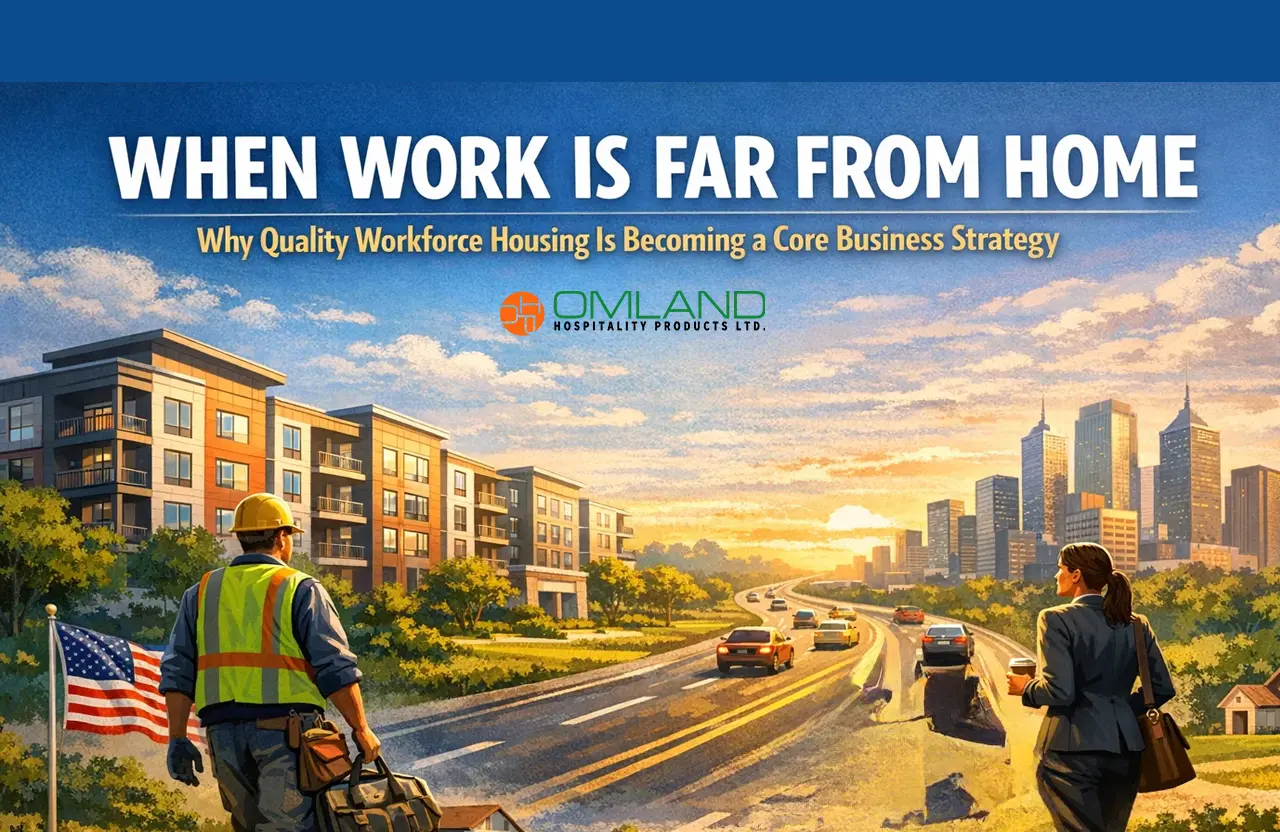
Across the United States, work increasingly happens far from where workers live. It happens on wind farms in West Texas, infrastructure projects outside Phoenix, wildfire response bases in California and industrial sites along the Gulf Coast.
Crews travel hundreds or thousands of miles, live on site for weeks or months and return home only between rotations. In this reality, workforce housing is no longer just a logistical necessity.
It has become part of the employment offer, part of the retention strategy and part of how companies protect productivity.
Why Companies Invest in Workforce Housing
1. The Work Is Where the Projects Are
Large projects rarely happen in dense urban centers. They happen where land, infrastructure and natural resources align.
⚡ Energy Projects Oil fields and renewable energy developments across Texas, New Mexico and North Dakota.
🚧 Infrastructure Highway construction and public works projects across the Midwest and Southeast.
🌾 Agriculture Seasonal processing and agricultural work requiring temporary labor forces.
🔥 Disaster Response Emergency housing for wildfire crews, recovery teams and disaster relief workers.
Local housing markets often cannot absorb a sudden influx of dozens or hundreds of workers. Workforce housing operators step in with purpose-built accommodations designed to move with the work.
2. Comfort Directly Impacts Performance
Workers in remote environments live in a constant “in-between.” They are not tourists, but they are not permanent residents either. They are there to work, rest and repeat.
In that environment, small details matter more than many people expect.
- A bed that doesn’t squeak when someone turns
- Clean, organized storage for work gear
- A room layout that feels structured, not chaotic
- A mattress that supports real rest after a long shift
When housing feels reliable and functional, crews stay longer and perform better.
3. Short Stays Still Carry High Expectations
Some crews stay for three nights. Others remain for three months. Some projects last years.
But regardless of duration, expectations remain consistent. Workers have stayed in hotels, student residences and vacation rentals. They know what a clean and functional room should feel like.
If staff housing feels significantly worse, it becomes a recruiting and retention challenge.
What Workers Actually Need in Their Rooms
A Solid Bed
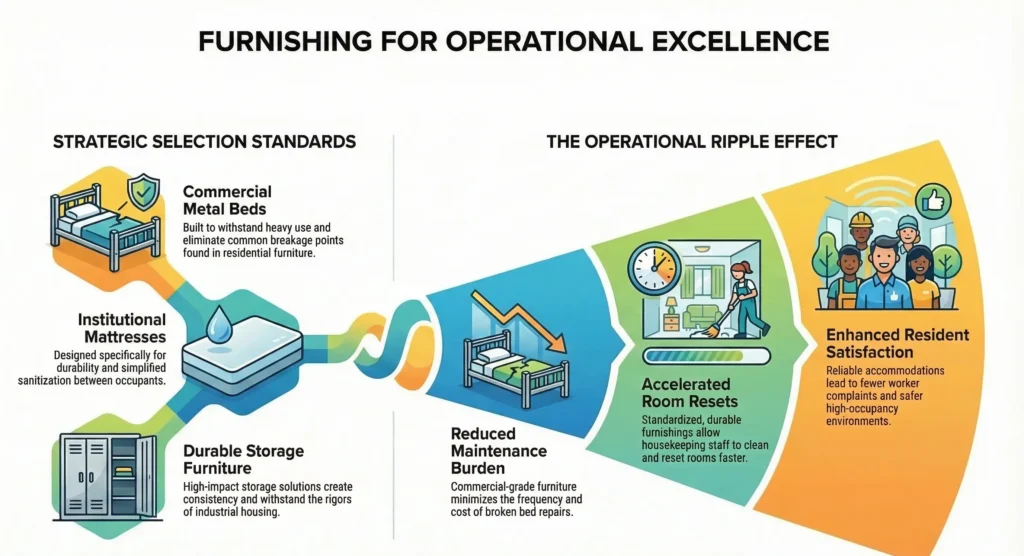
Flimsy frames create noise and instability. Commercial metal beds signal durability and long-term use.
Built-In Storage
Underbed drawers or integrated storage help workers organize boots, uniforms and personal items.
Easy Cleaning
Rooms must reset quickly between rotations, so durable wipeable surfaces are essential.
Consistency
If some rooms feel good and others feel neglected, it quickly becomes a source of daily frustration.
These are not luxury upgrades. They are the fundamentals of stable housing for workers who are far from home.
Where Omland Hospitality Fits In
Omland Hospitality works with workforce housing operators who support remote and semi-remote crews across North America.
These include:
- Remote workforce camps
- Industrial and infrastructure crew housing
- Modular workforce housing providers
- Seasonal and rotational staff accommodations
Our focus is simple: help operators create rooms that feel stable, organized and functional for the people living in them.
Typical Solutions Include
- Metal storage beds combining sleep and storage in one footprint
- Commercial metal beds and bunk systems sized for adult crews
- Vinyl-covered waterproof mattresses designed for fast cleaning
- Durable storage furniture that withstands heavy daily use
Planning Workforce Housing for an Upcoming Project?
If you’re planning a new camp, expanding staff housing, or upgrading existing workforce accommodations, Omland Hospitality can help design furniture packages and layouts that balance durability, efficiency, and comfort.
Email:
csr@omlandhospitality.com
Phone:
1.905.858.3456
1.866.675.9590