Register now to view prices, and place orders!
Register now to view prices, and place orders!
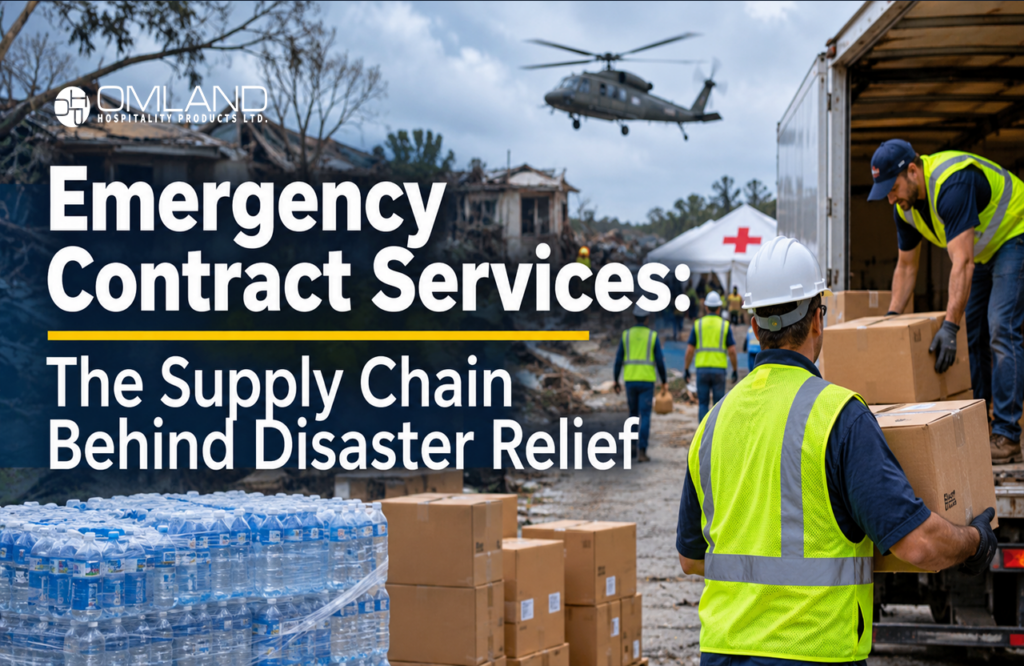
When disaster strikes, a powerful network of procurement, logistics and suppliers works behind the scenes to keep essential services moving.
The world sees the rescue teams. But who makes sure the beds, supplies, equipment and temporary facilities are ready?
Behind every disaster response is a complex supply network that helps turn emergency plans into real support for affected communities.
Disaster response depends on several connected stages. Each plays an important role in getting essential resources where they are needed.
|
📋
01 Sourcing essential goods and services
|
➜ |
📦
02 Managing stock and availability
|
➜ |
🚚
03 Moving products to the right locations
|
➜ |
🏠
04 Supporting facilities and communities
|
Emergency contract services are agreements with qualified suppliers and service providers that help government agencies and relief organizations access essential products and services during emergencies.
Rather than building a supply network from scratch during a crisis, organizations can work with established vendors to source equipment, furnishings, transportation and other critical resources.
Think beyond emergency supplies.
These services can support everything from temporary accommodation and healthcare facilities to warehousing and large-scale distribution.
Organizations such as the Federal Emergency Management Agency (FEMA) coordinate disaster assistance and procure goods and services to support response and recovery.
The American Red Cross and the International Federation of Red Cross and Red Crescent Societies help deliver relief and support to communities affected by emergencies.
Manufacturers, distributors, logistics providers and specialized vendors supply the products and services that keep emergency operations functioning.
When people are displaced or essential facilities are disrupted, the need for functional spaces and everyday necessities becomes urgent.
Beds, mattresses, bedding, linens, furniture and storage solutions for temporary accommodation.
Patient beds, privacy curtains, mattresses and essential furnishings for medical environments.
Food, water, sanitation products and everyday necessities for affected communities.
Warehousing, inventory management, transportation and coordinated delivery.
Suppliers must be prepared to respond to changing requirements, manage large-volume orders and coordinate dependable deliveries.
Emergency procurement creates opportunities for qualified businesses that can meet institutional and humanitarian requirements.
Suppliers of commercial furniture, bedding, mattresses, linens, modular accommodation products and healthcare furnishings can contribute to the infrastructure needed for temporary housing and emergency facilities.
Understanding procurement requirements, maintaining accurate product information and building relationships with relevant organizations can help businesses prepare to participate in this sector.
Disaster response depends on more than the people on the front lines. It takes coordinated procurement, reliable suppliers and the infrastructure to deliver essential resources when communities need them most.
Omland Hospitality
Supporting the spaces and solutions that matter.